
Junior Hockey: The Step Most Parents Don't Understand Until It's Too Late
Most parents have never heard of junior hockey until their kid is 17 and scrambling. Here's what it is, why it matters, and what you should be doing right now.
Save Your Place
Build a locker around what you are learning.
A free account lets you save articles, come back to your notes, and start asking better questions when something in your game keeps showing up.
Junior hockey is the in-between for amateur players that are looking to go to college or professional. It's the place you'll have to play if you're moving from midget AAA or high school hockey to a college team, or from midget AAA to professional hockey. It gives coaches and teams an opportunity to watch you play for a year or more without spending money or committing to you.
If you're an exceptional player, you could technically play at 15, but usually ages are around 17 to 18 years old. There are a bunch of different levels, but the main ones you want to focus on are the Ontario Hockey League, Quebec Major Junior Hockey League, WHL, USHL, NAHL, BCJHL, and the list goes on. Usually you have to try out for these teams. A lot of the teams have open camps that lead to a main camp. Sometimes those open camps are used to help make a little money for the organization in the hopes of maybe finding one or two players.
Most of the coaches have already figured out who their team is because their jobs depend on it. As a player you will need to leave your family and arrange for a billet family that you'll pay monthly to stay with. Some teams will have you take classes or get a job, but some don't require that.
One thing parents need to understand is how the CHL leagues and NCAA eligibility work together. The old rule was that any time spent in the OHL, WHL, or QMJHL automatically killed your NCAA eligibility. That's changed. Players can now receive expenses like housing, travel, gear, and a living stipend in those leagues and still retain their NCAA eligibility, as long as they're not receiving benefits beyond those expenses. The USHL and NAHL also protect eligibility, and those have always been the traditional NCAA pipeline. But the point is, the CHL is no longer an automatic disqualifier. You just need to understand the rules and make sure you're not crossing the line. This is a conversation every family needs to have before their kid commits to any league.
This is not optional for most players. Most of the best players in the National Hockey League played junior hockey somewhere. It's a non-negotiable. There are definitely exceptions to the rule, but those exceptions could literally play anywhere and make it. They could go to prep schools back east, prep schools in Minnesota, or some other opportunity. But that's very rare.
The Mistake Most Parents Make
For most hockey organizations, each player represents a monetary number. If the player comes in at eight and leaves at 18, that player may be good for $100,000 to $150,000. The thought process isn't really about preparing the player to go play junior. It's about keeping them in the organization so that they can win. That's not everybody, but you do have to be aware of that with your organization.
Most parents come to me because their kids are starting to age out and all of a sudden they bring up the idea that they need to go play junior somewhere. The parents ask me, what's junior hockey? I always find it interesting that the teams they've spent so much money and time on haven't informed them of what that is and haven't pushed them to prepare for this process.
One of the biggest mistakes parents make is that they just don't know what junior hockey is. When it comes time to make these decisions, it becomes a mad scramble and sometimes they end up going to the wrong place.
There is a lot of prep you can do to get ready for junior hockey. Things like finding a local contact that knows a junior coach or scout. Signing up for showcases at 15 and 16 across the country where you know good coaches will be. If you go that route, it's very important to know who is going to be there and make sure that you find out what coaches are there once you show up.
A little bit of research goes a long way. Trying to match up with the coaches that may be on your bench or on the ice with you and adapting your style of play to fit theirs can help. They were a player at one point. Looking the part when you walk into a rink is a huge deal. Being respectful and introducing yourself to the coaches helps. Nobody does that, so it does stand out when you do.
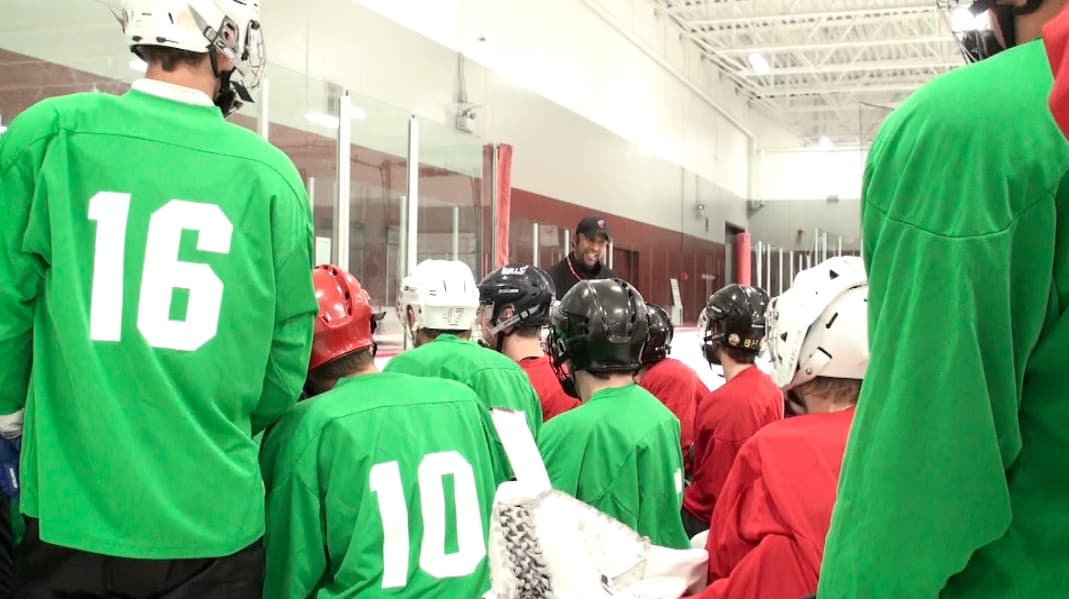
Brad Perry coaching junior players at a showcase
My Junior Hockey Journey
I played games for five junior teams. Two exhibition games for the Portland Winter Hawks in my fourth year playing. I went from there to Kimberley, British Columbia to play for the Dynamiters. Next was the Heartland Winter Hawks, then the Bismarck Bullets, next was the Michigan Nationals, and then the Wisconsin Capitals. I also tried out for a team called the Bellingham Ice Hawks, where I briefly stayed with John Utendale who played on the Black line with Willie O'Ree and Stan Maxwell back in the day.
I tell you all this to say that I was trying to find a home, and the way that I did that was by going all in on junior hockey. My stepdad knew that had to be the path. There are a few more options these days, but usually you end up playing junior hockey at some point. There's a lot more access to information than there was when I was traveling around trying to play and find a home.
I was still going to high school and had to apply for student visas, hospitalization cards, and transcripts. It was a lot. It was worth it to me because I was doing the thing that I love the most. But the expectation shouldn't be that just by playing junior hockey you're going to make it, because that's not the case.
The billet family part is something nobody really prepares you for. You're 16 or 17 years old, living in a stranger's house in a city you've never been to, hours or sometimes a country away from your parents. Some billet families are incredible and treat you like their own kid. Some are doing it for the monthly payment. You don't get to pick. Your team assigns you and you make it work. The maturity it takes to handle that situation is something most kids haven't been tested on yet, and it shows up fast when they get there.
Every player that has a dream of playing professional hockey or college hockey needs to understand that they are a business and they need to market themselves as a business.
Start Preparing Now
If your plan is to play college or professional hockey, you need to start thinking about junior hockey at 13 or 14. This is where you start making contact, you start growing, and you see real potential. You also find out who still loves the game and who wants to continue. At this point you need to start thinking about the future and not be like most of the players that I coach at 17 or 18 that come to me with their parents asking what's junior hockey.
You're most likely not going to get a lot of help from your organization in my experience. Every now and then you'll have somebody do a junior hockey clinic or run a showcase, but those don't usually prove to be very fruitful for most players. There are combines that you can get invited to, but again most coaches already know who they want.
That means speaking for yourself, speaking up, forming relationships, doing research on teams to figure out what style of play you need to adapt to, and showing up for camps if you get invited. Things like putting good goals or hits or plays on a YouTube channel versus the Junior Kings or versus Chicago Young Americans or versus Little Caesars can get reach and give you something to send to coaches when you're ready to try out.
You can also follow coaches of teams that you may want to play for, college included, and get involved in their hockey school as a counselor or coach. Getting out in front of a coach that may be coaching you on a team is a great idea as long as you don't take it for granted and waste the opportunity.
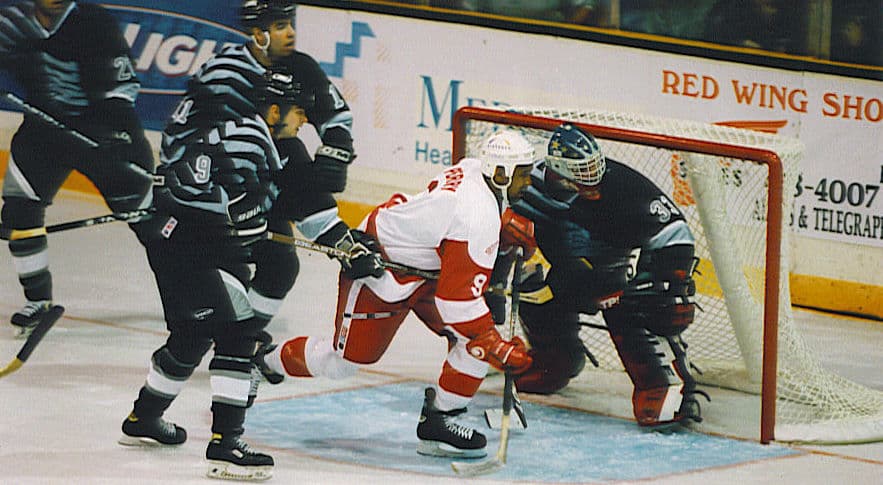
Brad Perry playing for the Toledo Storm
What I Wish Someone Had Told Me
I played junior hockey in Minnesota and Wisconsin, and if I had to do it all over again, I would probably have started in high school hockey in Minnesota. That being said, I wish someone had told me to prepare for junior hockey. The mentality at the time, and it still exists, is that if you leave your team to go play juniors, most of your teammates and families will think that you're wasting your time because they think they are better than you. So you need to be confident in your abilities but also work extremely hard to get there.
The main part that I wish somebody had told me in advance was what junior hockey was, how important it was to my career, and what I should be doing. My stepdad was a great skills coach, but he didn't play junior hockey and hadn't experienced it. My Junior Kings coaches didn't play junior hockey. By the time I got to junior, those coaches were more focused on keeping their job than doing the extra work it would have taken to promote me as a player.
That's why I say you've got to treat yourself like a business, because you are the only one that will. Most of your coaches will not promote you to a team that's suited for you. If they do make a call to somebody, usually it's a call to a friend of theirs and they may not be a good fit for you and your style.
Research is a really important part of this. You can go to HockeyDB or Elite Prospects to look at previous seasons and see what teams need point-wise. Do a little homework on YouTube and the internet and try to fill that hole. Remember that these coaches have families and responsibilities. Most of the time they don't want to lose their job and have to move their family again because they didn't win. There is a lot of pressure on these coaches to pick a winning team, so you need to make sure that when you do show up, you stand out. Preferably standing out in the style of the coach that's in front of you.
The bottom line is this. If your kid is 12 or 13 and serious about hockey, you should already know what junior hockey is. You should already be having conversations about what the path looks like. You should be researching leagues, attending showcases, and building relationships with coaches and scouts. The families that start this process early give their kids the best chance. The ones that wait until 17 are playing catch up in a game where most of the roster spots are already filled.
Don't let your kid be the one who finds out about junior hockey too late. The information is out there. The path is clear. But nobody is going to hand it to you. You have to go get it.
Key Takeaways
- Start researching junior hockey at age 13-14, not 17-18
- Your youth organization probably won't prepare your kid for this step
- Treat your player like a business: highlight reels, coach research, showcases
- CHL expenses no longer automatically kill NCAA eligibility, but know the rules
- Use HockeyDB and Elite Prospects to research what teams need before tryouts
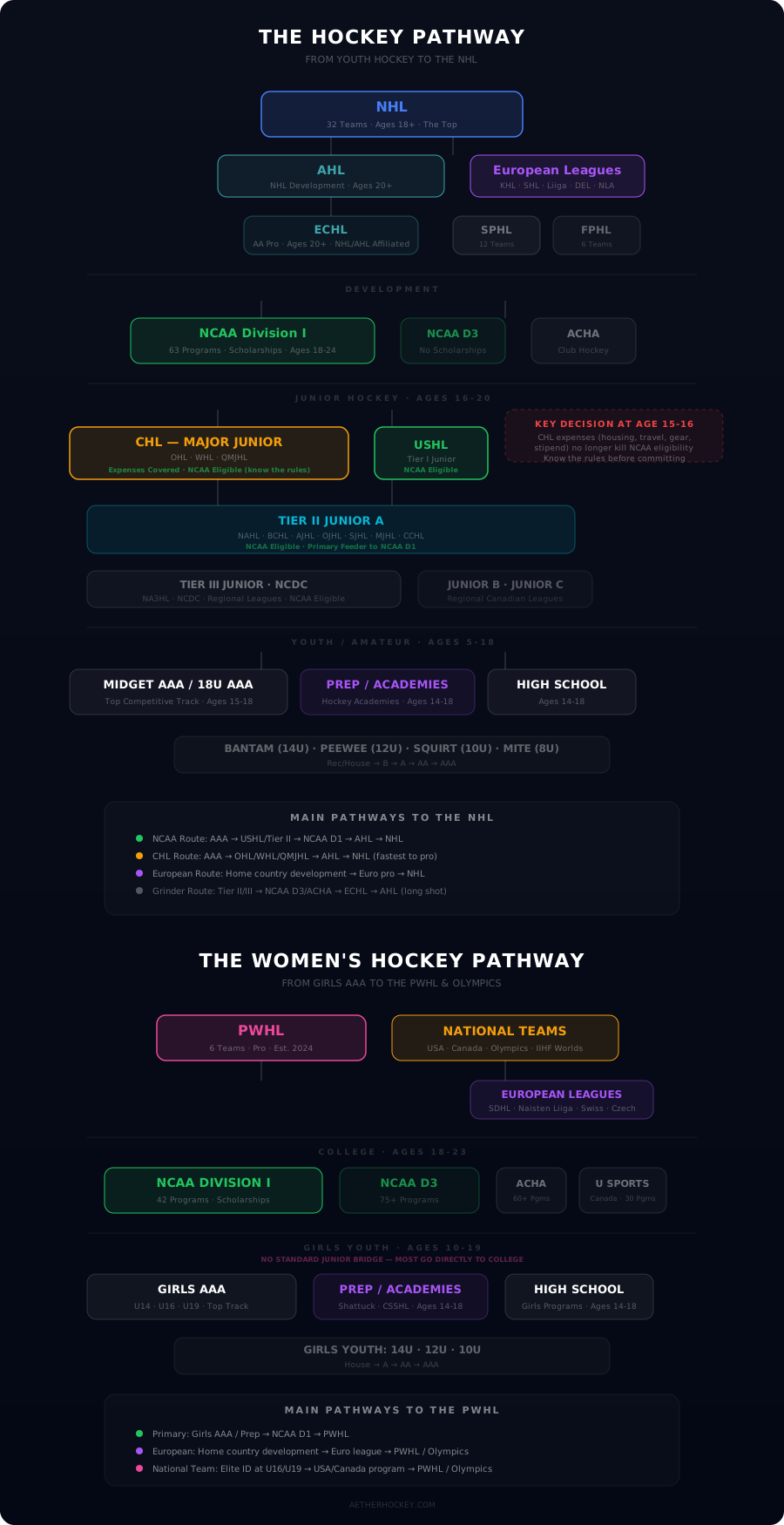
The Hockey Pathway: From Youth Hockey to the NHL
Turn It Into Reps
Do not just read it. Put it into your game.
Start free, save the article, then use Ask Coach Brad when you want help turning the idea into a drill, a correction, or a plan for your next skate.
Keep Reading
Parent · 6 min read
Your Kid's Coach Is Not Playing Them. What to Do Next.
Your kid is on the bench and you don't know why. Before you email the coach or switch teams, here's what's actually happening and what to do about it.
Parent · 7 min read
Your First 30 Days in Hockey
A parent walks up. Their 9-year-old has never skated. They want to try hockey. Here's exactly what I tell them.
Skills · 6 min read
Every Hockey Skills Video Is Wrong
I've watched almost every hockey video out there, and every one has something wrong in it. Here's the mistake nobody talks about, why cradling the puck is costing your player, and how to actually get better.