
Why Your Skills Coach Is Only Teaching You Half the Game
Most skills coaches specialize in one thing. Here's why that leaves your player with half the picture and what to look for instead.
Save Your Place
Build a locker around what you are learning.
A free account lets you save articles, come back to your notes, and start asking better questions when something in your game keeps showing up.
Most skills coaches specialize in one thing. They'll teach a couple different skills, but they're more of a drill coach than a skill breakdown coach. Once you've established yourself as a shooting coach or a skating coach, most coaches stay in their lane because it's comfortable. And that can be a good thing because you don't want a coach teaching something they shouldn't be, which happens a lot.
It's a very hard thing to talk about skating but also understand puck control, passing and shooting options, all while under the threat of contact, and then create a drill that incorporates all of those things at the right level. Not to say it can't be done. I have a lot of friends that coach specific areas and do a great job. But the full picture is rare.
The Problem with Comfortable Coaching
Here's what happens. A kid goes to a skating coach on Monday, a shooting coach on Wednesday, and a stickhandling coach on Friday. Each one teaches their skill in isolation. The skating coach has you doing crossovers with no puck. The shooting coach has you ripping wrist shots from a standstill. The stickhandling coach has you doing toe drags in a straight line.
None of that looks like hockey. In a game, you're skating while handling the puck while reading the ice while someone is about to hit you. If you're never training those things together, you're only learning half the game.
What a Complete Session Looks Like
When I run a session, it typically starts with a drill we left off on or a random skill I see the player needs. Then it grows from there. I'll ask the player or their parents what they want to work on, but as we spend time together, it becomes pretty clear what they actually need.
I try to teach whatever the skill is under the idea that there will be contact or conflict at some point. Start in a place where you're protecting yourself and then perform the skill. I've been hit hard so many times that that's always been a key part of everything I teach. You don't get to do a toe drag in a game without someone trying to take your head off.
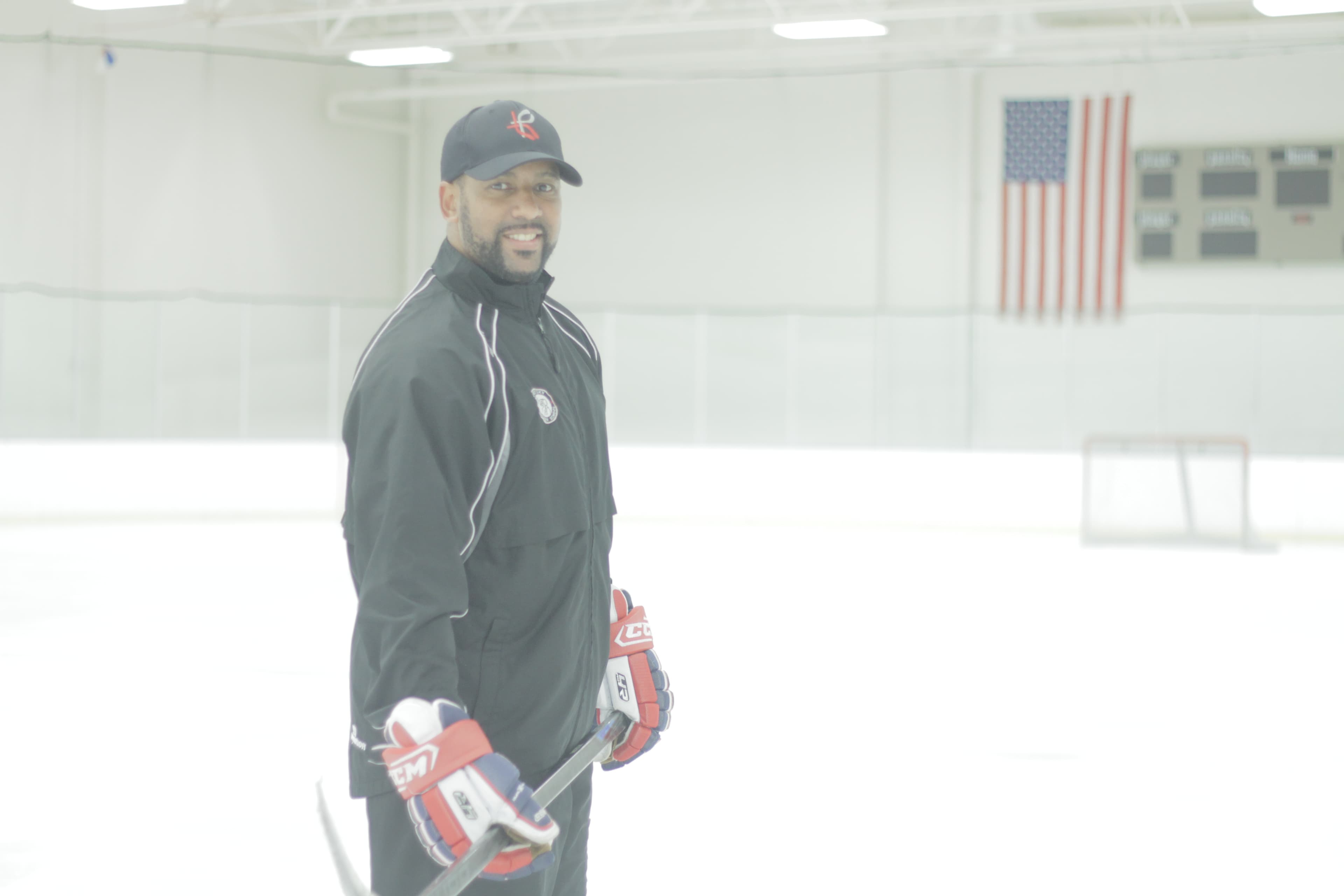
Brad Perry on the ice ready to coach
What Parents Should Know
Parents need to be aware that their kid may not like working with a particular coach. Listen to them. If they don't want to work with someone, don't force it. Sometimes parents want to discipline their kids through the coach. They feel like their kid doesn't respect them so they look for a hard nosed drill sergeant type to instill discipline. When that happens, a lot of the time the player will accidentally fall on purpose or find ways to fail at the drill. Be on the lookout for that.
With all of this, it's really hard to not see the value in the ice time you get even when you're out there with any coach. Just having access to ice increases your opportunity to improve.
I really improved by playing and skating in practices with better players that I respected. A good scrimmage with good players can be more beneficial than a lot of the skill training you'll get from some coaches.
But always remember that any ice is good ice. Mostly.
Key Takeaways
- Training skills in isolation doesn't look like hockey. The best sessions combine skating, puck control, and contact awareness.
- Listen to your kid. If they don't want to work with a coach, don't force it.
- Playing with better players you respect can be more valuable than most skill sessions
- Look for a coach who teaches under the idea that there will be contact or conflict at some point
Turn It Into Reps
Do not just read it. Put it into your game.
Start free, save the article, then use Ask Coach Brad when you want help turning the idea into a drill, a correction, or a plan for your next skate.
Keep Reading
Mindset · 5 min read
The Coach You Hate Might Be the One Who Gets You Your Next Job
Why adaptability is the most underrated skill in hockey. And how the coach standing in front of you right now might be the one who gets you your next job.
Mindset · 6 min read
Stop Saying You Play Better with Better Players
Why this common excuse is holding you back. And the mindset shift that changed my game and can change yours.
Mindset · 6 min read
The Skill Nobody Teaches That Every Coach Notices
Why being the player who picks up the pucks, carries the water bottles, and does the job nobody asked you to do is the fastest way to get noticed by every coach in the building.